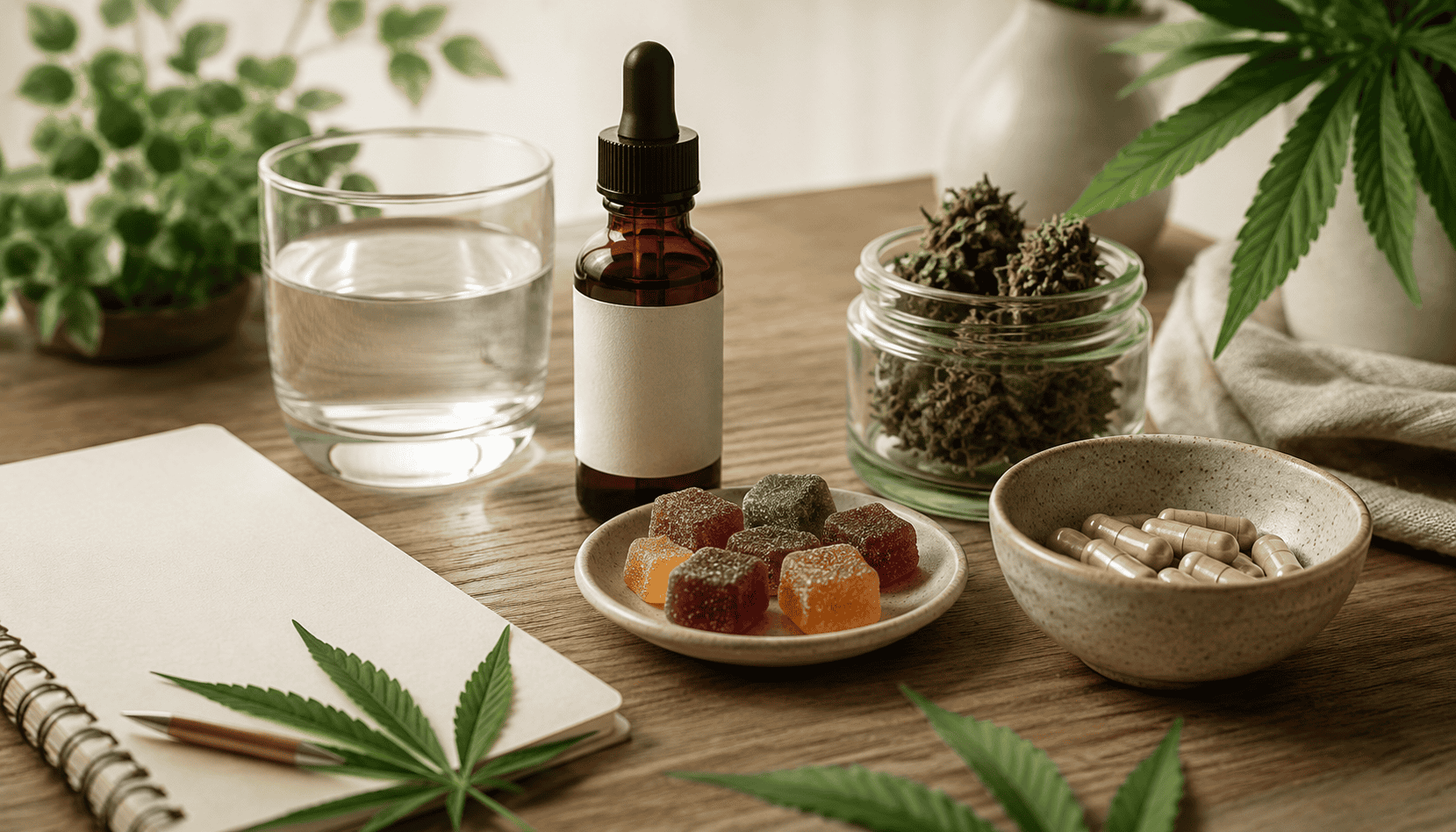
 Understanding Microdosing Cannabis for Pain Relief
Microdosing cannabis is a common search topic among Canadian adults researching cannabis and pain. The term usually refers to using very small amounts of cannabis with the goal of limiting unwanted effects, especially THC-related impairment.
However, microdosing cannabis for pain relief in Canada should not be treated as a proven or risk-free strategy. There is no universal definition of a cannabis microdose, no guaranteed pain-relief outcome, and no single approach that works for everyone. Pain can have many causes, and cannabis effects can vary by product, person, format, THC content, CBD content, tolerance, medication use, and health history.
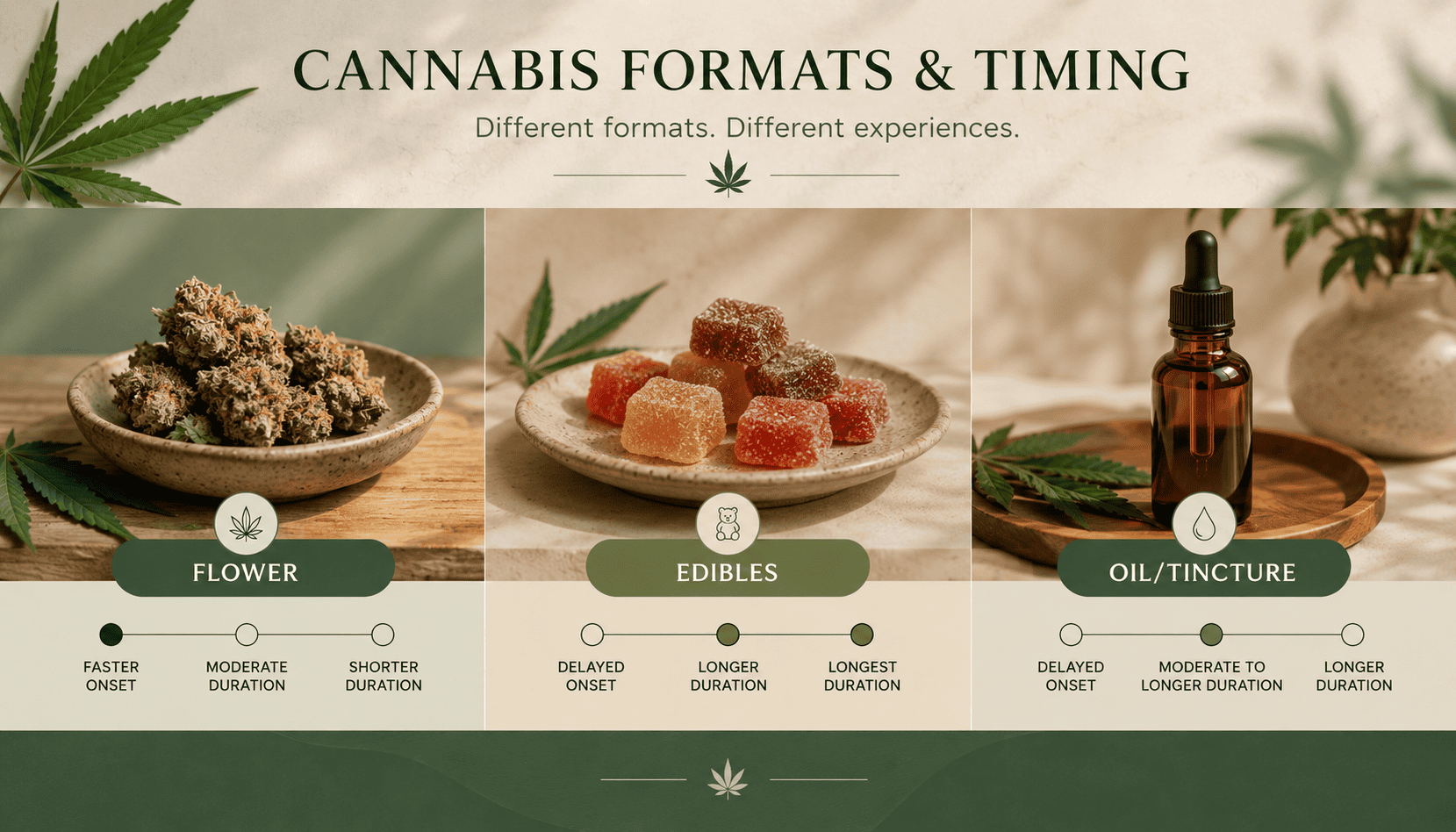
Health Canada explains that cannabis effects can vary depending on how it is consumed. Inhaled cannabis may produce effects within seconds to minutes, while edible cannabis can take 30 minutes to 2 hours to produce effects and may last much longer.
This guide explains what microdosing means, why some adults ask about low-dose cannabis for pain, what the research says, and why caution matters.
This article is for general education only and is not medical advice.
Microdosing cannabis generally means using a very small amount of cannabis rather than a larger amount. The idea is often discussed by adults who want to understand whether lower THC exposure may reduce unwanted effects such as anxiety, dizziness, sleepiness, or feeling overly impaired.
The challenge is that microdosing is not a standardized medical term. What one person considers a microdose may not be the same for someone else. Product format, THC level, CBD level, body chemistry, tolerance, food intake, and medical history can all influence the experience.
Microdosing may be discussed with:
Even when the amount is small, products containing THC may still impair.
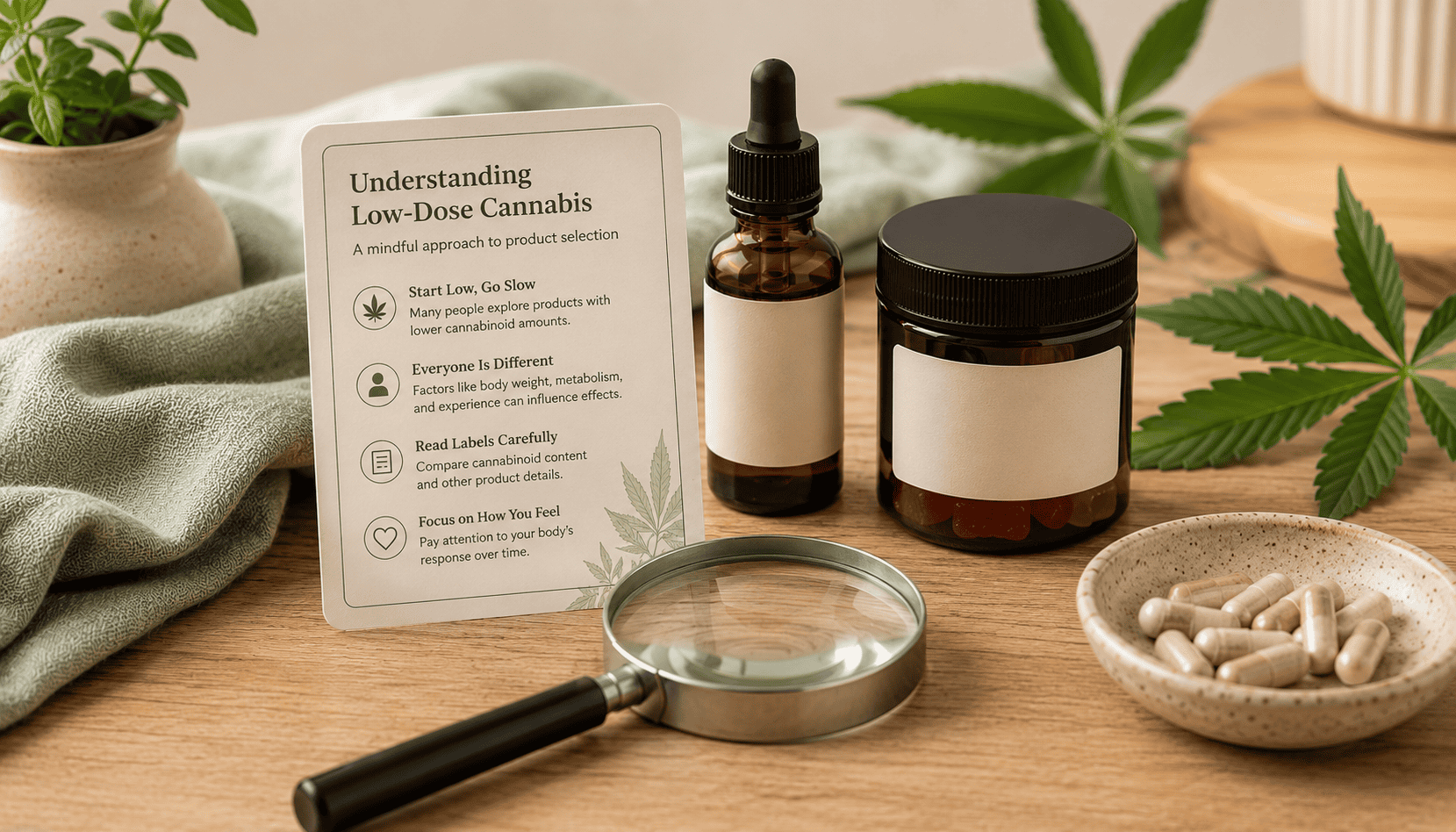
Some adults search for microdosing cannabis and pain because they are interested in lower-intensity cannabis experiences. Others may be trying to avoid feeling too high, too sleepy, or too foggy while researching cannabis as part of a broader pain-management conversation.
Common reasons adults ask about this topic include:
Interest in microdosing does not mean it is appropriate for everyone. Ongoing or severe pain should be assessed by a healthcare professional.
Cannabis and chronic pain research is still developing. Some reviews suggest cannabinoids may provide benefit in certain pain-related areas, especially neuropathic pain and multiple sclerosis-related spasticity, while evidence for conditions such as osteoarthritis, fibromyalgia, and musculoskeletal pain is less consistent.
Another 2025 review reported that cannabinoids may show moderate efficacy in some chronic pain areas, including neuropathic pain, fibromyalgia, cancer-related pain, and multiple sclerosis-related spasticity, but it also emphasized the importance of safety, patient differences, and product type.
Cannabis may be part of pain-related research for some adults, but it is not a guaranteed treatment for pain, and results vary.
Microdosing conversations usually involve THC, CBD, or both.
THC is the intoxicating cannabinoid in cannabis. It can affect mood, reaction time, coordination, memory, attention, and perception. Even small amounts of THC may cause unwanted effects in some people.
CBD is not intoxicating in the same way as THC, but it can still affect the body. CBD may also interact with medications and may not be suitable for everyone.
Some products contain both THC and CBD. These are sometimes described as balanced products. A balanced product may feel different from a THC-dominant product, but if THC is present, impairment is still possible.
Check out these King Tuts Balanced THC:CBD products:
TWISTED EXTRACTS GRAPE HALLEY’S COMET 1:1 JELLY BOMB , 1:1 BALANCED TINCTURES
Product format plays a major role in cannabis timing and intensity.
A small amount of inhaled cannabis may feel different from a small amount of edible cannabis. A cannabis oil may feel different from a capsule. A CBD-dominant product may feel different from a THC-containing product.
Format can influence:
Health Canada notes that inhaled cannabis can take effect within seconds to minutes, while cannabis that is eaten or drunk can take 30 minutes to 2 hours to produce effects and may last up to 24 hours.
Compare cannabis flower, edibles, and tinctures for pain-related research
Edibles are one of the most important formats to discuss carefully because their effects are delayed.
With edible cannabis, effects may not appear right away. This delay can make it harder for adults to judge what they are feeling. Health Canada states that edible cannabis may take 30 minutes to 2 hours to produce effects and may last much longer than expected.
That timing issue is one reason edible cannabis can be risky, even when a person believes they are taking a small amount.
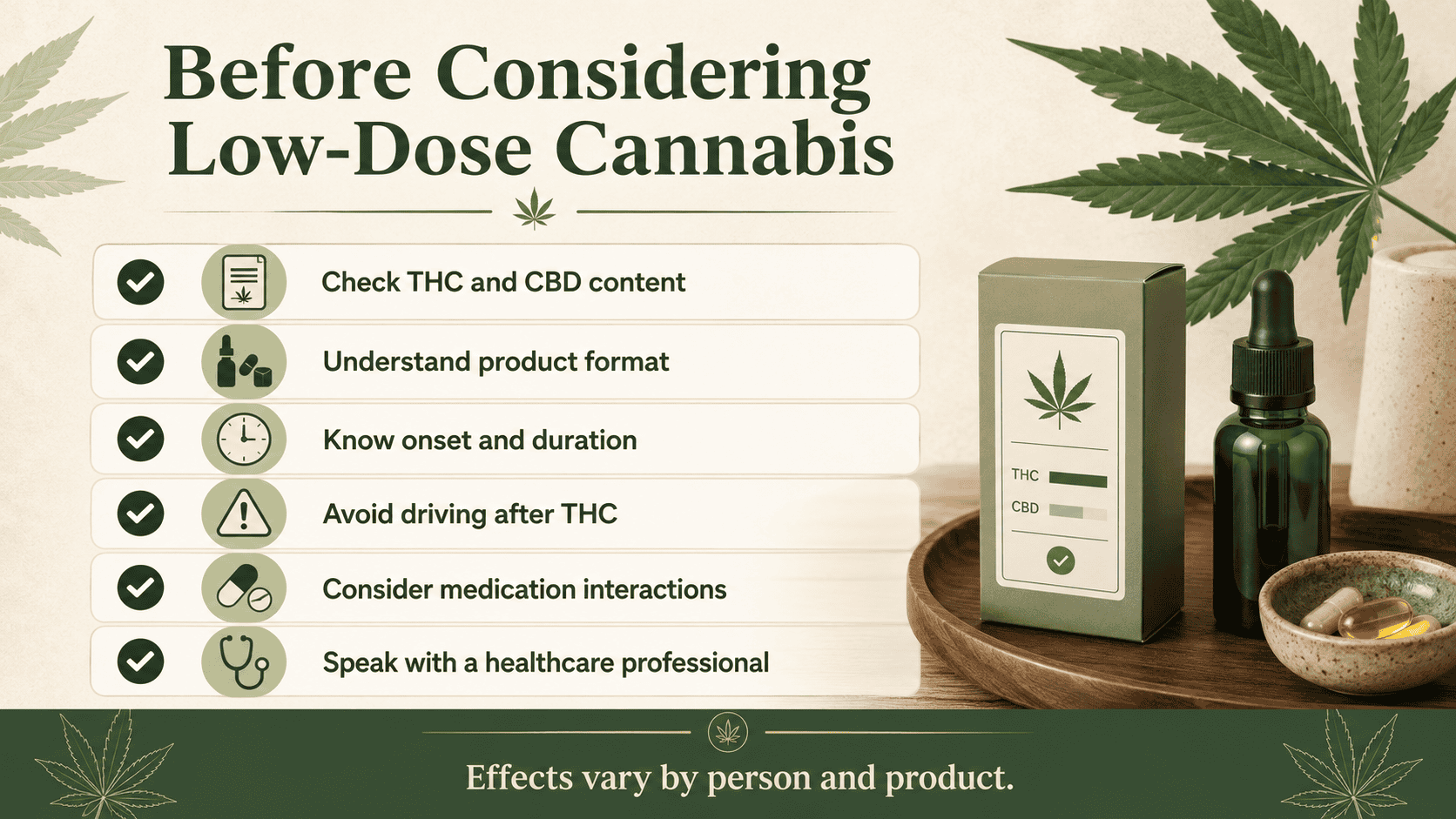
Microdosing does not remove cannabis risk. Lower amounts may reduce the chance of unwanted effects for some adults, but THC can still impair, and individual responses vary.
Possible side effects may include:
Health Canada warns that THC can impair driving and operating equipment by affecting coordination, reaction time, attention, decision-making, and judgement. Impairment can last more than 24 hours in some cases.
Adults should not drive, operate equipment, or do safety-sensitive tasks after consuming THC-containing cannabis.
Many cannabis education resources use the phrase “start low,” but that phrase should not be misunderstood as a full safety plan. Lower does not mean risk-free.
A cautious approach still requires understanding:
For a medical or pain-related concern, adults should speak with a healthcare professional instead of relying on product claims or online advice.
Yes. Cannabis products may interact with medications, especially products containing THC or CBD.
Extra caution is important for people using:
A pharmacist or healthcare professional can help assess interaction risks.
Pain should not be ignored or covered up without understanding the cause.
Adults should seek medical guidance if pain is:
Pain can be muscular, nerve-related, inflammatory, injury-related, chronic, or connected to another medical condition. The cause matters.
Microdosing cannabis usually means using a very small amount of cannabis. However, there is no universal definition of a cannabis microdose, and effects vary by person, product, and format.
Not automatically. Lower amounts may reduce unwanted effects for some adults, but cannabis can still cause impairment, side effects, and medication interactions.
There is no guaranteed answer. Research suggests cannabinoids may help some chronic pain conditions, but results vary by pain type, product type, cannabinoid profile, and person.
Yes. THC is intoxicating and can impair. CBD is not intoxicating in the same way, but it can still affect the body and may interact with medications.
Edibles can be tricky because effects are delayed and may last longer. Health Canada notes that edible cannabis can take 30 minutes to 2 hours to produce effects and may last up to 24 hours.
Yes, especially if pain is chronic, severe, injury-related, or connected with medication use or another health condition.
Microdosing cannabis for pain relief in Canada is a popular search topic, but it should be approached carefully. The term “microdosing” is not standardized, and low-dose cannabis is not a guaranteed pain solution.
THC can still impair. CBD can still affect the body. Edibles can take longer to work and last longer than expected. Research into cannabinoids and pain is developing, but results vary by condition, product, and person.
For Canadian adults researching microdosing cannabis and pain, the safest first step is education. Understand THC and CBD, compare product formats, be aware of impairment risks, and speak with a healthcare professional when pain is ongoing or health-related.

Copyright 2022 © All Rights Reserved.